
When baseball season ends, the work on the field isn’t over. At the Visalia Rawhide, the offseason is our chance to address the wear and tear from a long season, make necessary repairs and get the field ready for the year ahead. Knowing what needs attention first helps us make the most of that time.
I got my start in turfgrass working at the campus golf course while attending Oregon State University. In 2014, I came to Visalia to join the Rawhide as a groundskeeper. Now, as Director of Facilities and Grounds, I’ve learned how important it is to stay ahead of the work rather than wait for problems to show up the following season.
A big part of that is knowing what needs attention right away and what can wait until later in the offseason.
Start With the Areas That Took the Most Wear
Once the season ends, I walk the field and look at the areas that took the most traffic. In front of the pitcher’s mound, around home plate, behind shortstop and second base, and along both foul lines are all places that tend to show wear. Those are the areas I want to evaluate first.
From there, I decide what each area needs. Some spots may need sod, while others may respond well to aeration and sand. I also look at the overall condition of the turf to determine where verticutting and scalping will help.
After the season, we verticut, aerate and scalp the bermudagrass as low as possible. These practices are part of our regular field preparation, along with repairing damaged areas and making sure the surface is in good shape for the months ahead. If a section needs new sod or a more extensive repair, I make a note of it so we can prioritize the work.
We also secure the tarps over home plate, the pitcher’s mound and the bullpens. Those clay areas need protection from the weather, so that’s another job we take care of as soon as the season ends.
Get Irrigation Right Before Winter
Irrigation is one of the biggest things I pay attention to, and it’s something we check throughout the year – not just in the offseason.
If the irrigation system isn’t doing its job, the grass is going to show it. I check sprinkler coverage, head depth and water pressure, and inspect heads and valves for problems that need repair. Uneven coverage can leave some areas struggling while others get more water than they need, making it harder to keep the turf healthy.
The offseason is a good time to address those issues before they become bigger problems. I want to make sure the system is working properly and the field is getting uniform coverage before the next growing season.
Keep Up With Maintenance Through Dormancy
November and December are important months for us. Since we don’t overseed our bermudagrass, we have a limited window after the season to get the turf healthy before it goes dormant. Before dormancy, we apply post-emergent and pre-emergent herbicides to help control existing weeds and prevent new ones from becoming a problem through the winter and spring.
But the work doesn’t stop once the grass slows down. We still need to keep up with mowing, edging and our regular pest, disease and weed management. The schedule and timing change with the weather, but maintenance still needs to happen.
One thing I’ve learned is that bermudagrass generally comes back in the spring the way it went into dormancy. If you go into winter with weak turf, bare spots or irrigation problems, you shouldn’t expect those issues to fix themselves. That’s why I try to address problems as soon as I see them instead of putting them off until spring.
It’s much easier to maintain the field consistently than to let things slide for a few months and then try to catch up all at once.
Make a Plan & Prioritize the Work
After the season, I make a list of the issues that need attention and put them in order of priority. Weak turf, uneven areas, and irrigation adjustments are near the top because they affect the health of the grass, and turf repairs need time to recover.
Other work, such as repairs to dirt areas, the warning track, the mound and home plate, can sometimes wait a little longer. Those areas still need attention, but the timing isn’t always as critical as it is with bermudagrass that’s about to go dormant.
Weather plays a big part in how we schedule everything. We have to pay attention to conditions and make the most of the time we have. The goal is to take care of the work that needs the most time to recover first, then move on to the other projects as the offseason progresses.
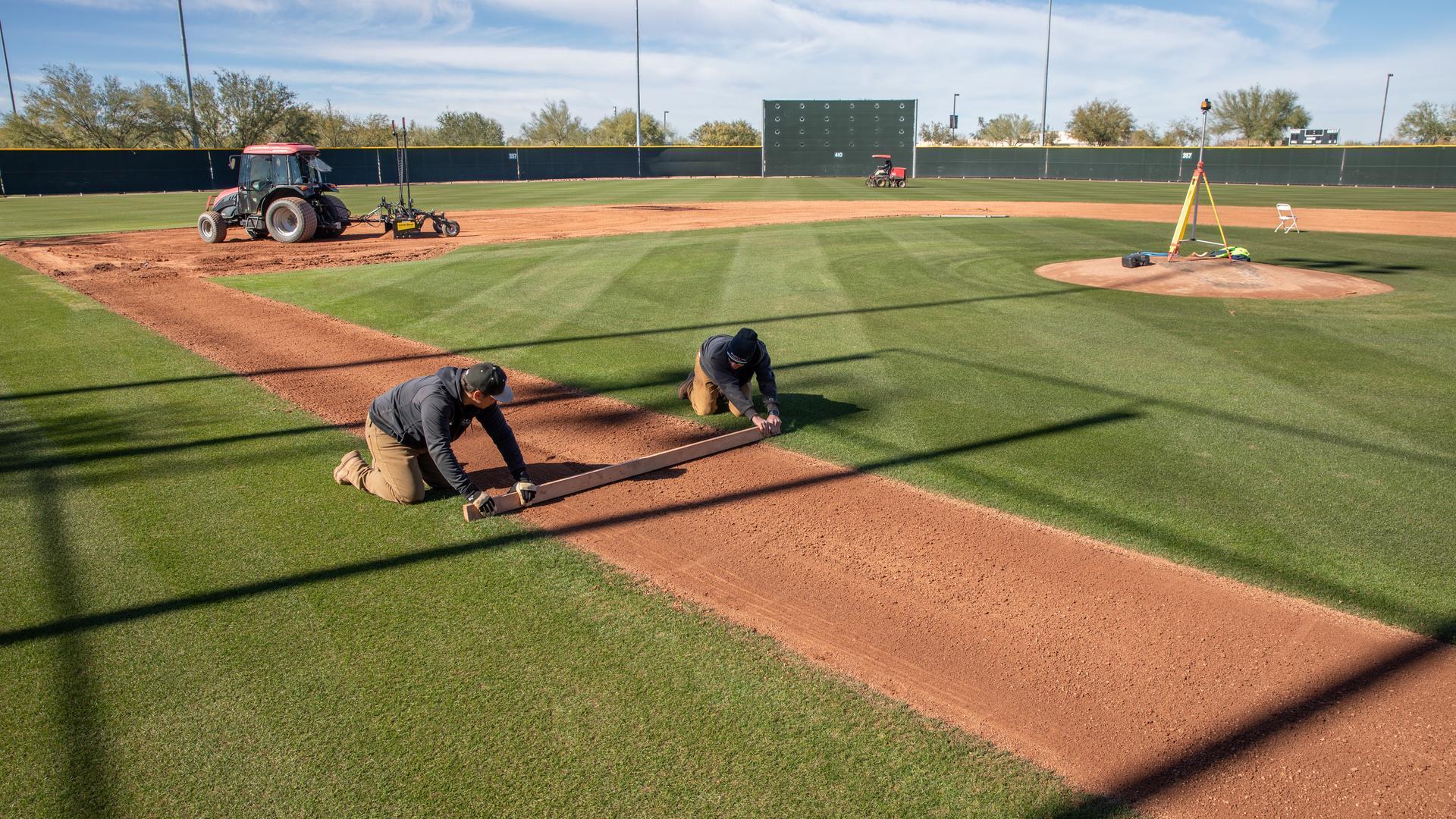
We also have events to prepare for beyond baseball. The Rawhide hosts concerts and festivals on the field, so after each event, I assess the damage and make repairs as needed. Then, as we get closer to the next baseball season, we work on the infield, warning track and other dirt areas, releveling them and adding material where it’s needed.
Having a plan helps make sure the important work gets done at the right time instead of leaving everything until the last minute.
Don’t Let Routine Maintenance Slide
Not every offseason project can be tackled at once, especially when staffing and resources are limited. But there are things we can do consistently to keep the field in good shape. Walking the field, checking irrigation, mowing, and edging regularly can help prevent small issues from turning into bigger repairs.
The offseason work shows when the team returns. The goal is to have the field and facility looking as close to new as possible, with healthy turf and properly maintained dirt areas. That’s much easier to achieve when we keep up with maintenance throughout the year instead of trying to catch up in the spring.

