

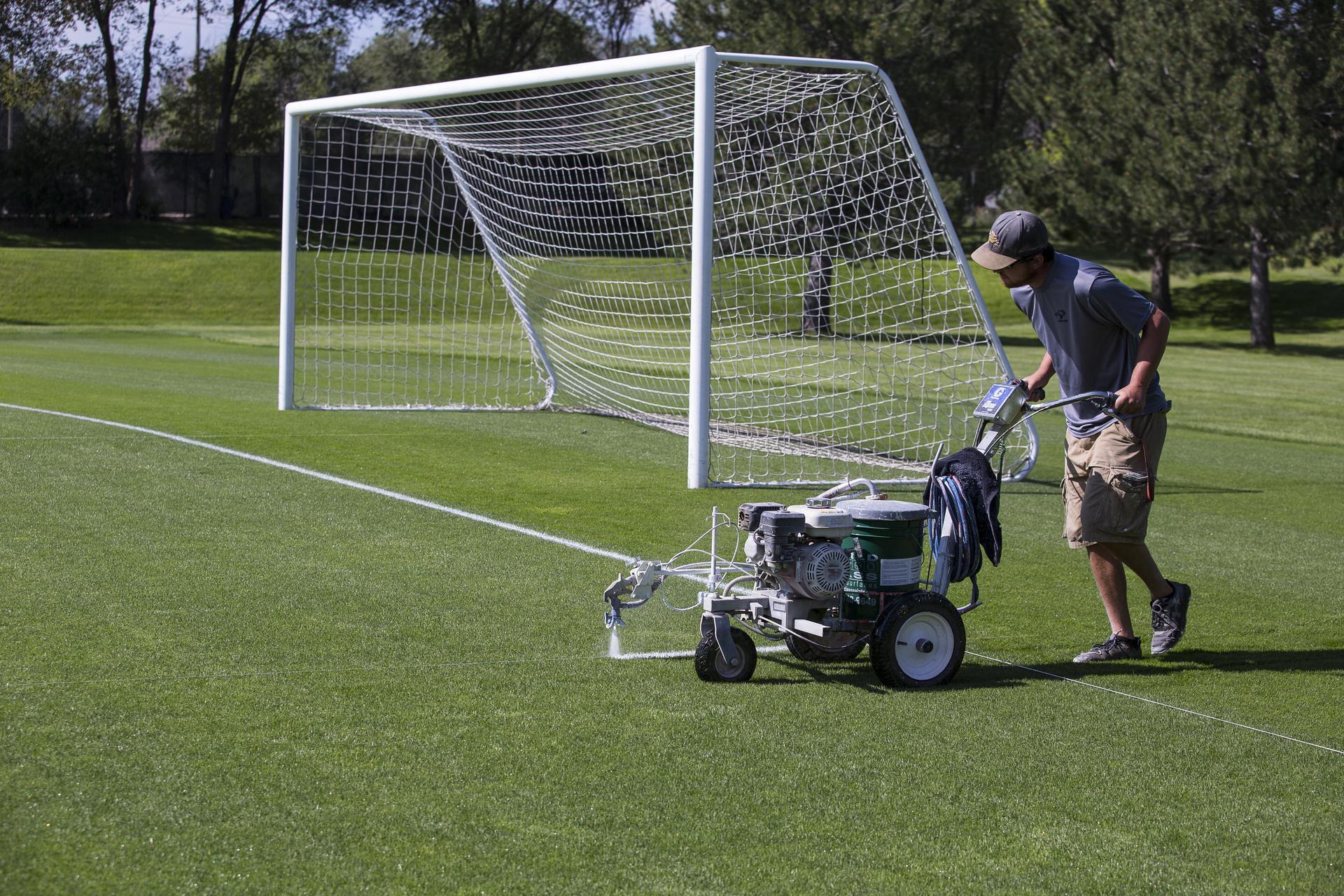
A great playing surface doesn't happen by accident. Behind every well-maintained field is a grounds team balancing field conditions, maintenance schedules, weather, staffing and constant field use. At the same time, coaches are focused on preparing their athletes and making the most of every training session.
For Kevin White, Head of Grounds for Seattle Sounders FC, the relationship between those two groups comes down to mutual respect and a shared understanding of what it takes to prepare a field.
“A strong relationship between the coaching staff and grounds crew involves a mutual respect for one another and centers on open lines of communication to achieve each of our respective goals and agendas,” says White.
That relationship can affect everything from field scheduling and maintenance planning to identifying problems before they become larger issues.
Understand What Goes into the Field
Coaches know what their teams need from a training environment. Grounds crews know what the field needs to remain healthy and playable. Understanding both sides can help teams make better decisions about field use.
“Coaches can provide insight on how the team's training needs to function and offer meaningful, constructive feedback with a shared vocabulary,” says White.
That two-way understanding is important because field preparation involves much more than what is visible before a practice or game.
“Much more is involved in field maintenance than mowing or grooming,” says White. “We manage dynamic environments that have similar needs as the athletes who use the fields.”
Weather, traffic, irrigation, maintenance practices, and field usage can all affect conditions. Giving coaches a better picture of those factors can help them understand why certain fields may need to be rotated, rested, or maintained at a particular time.
Give Grounds Teams Time to Plan
A busy schedule can put significant demands on a facility. Practices, games, camps and other events all compete for field space, while grounds crews still need time to complete maintenance and prepare surfaces.
White recommends giving the grounds team as much notice as possible when schedules change.
“I'm a believer in the philosophy of communicating early and often,” says White. “The sooner the grounds crew knows about schedule adjustments, the sooner we can begin planning for the adjustment to ensure we deliver a quality, consistent playing surface.”
That advance notice can help crews build field rotations, plan staffing, and determine which areas can handle additional use.
“Communication provides the knowledge of all scheduled events so that we can build proper field rotation and staffing schedules,” says White.
Without that information, even a well-planned maintenance program can be disrupted. White points to staffing as one of the biggest challenges.
“Improper communication leads to not having the appropriate staffing level when it's most needed,” he says.
Giving the grounds team time to prepare isn't just helpful for scheduling. It can also give fields the recovery time they need during demanding stretches of the season.
Speak Up When Something Doesn't Look Right
Coaches and athletes spend hours on the field, which puts them in a good position to notice changes in the playing surface.
White says grounds teams commonly receive feedback about surface hardness, traction, smoothness, cutting height, sprinkler head levels, abnormal turf color and wet or dry areas.
That feedback can sometimes uncover an issue that isn't obvious during a routine inspection.
During a summer soccer camp, one coach noticed “big chunks” coming up during training sessions. The grounds team investigated and discovered an infestation of grubs feeding on the roots and damaging the integrity of the playing surface.
“Had this coach not communicated as soon as he saw it happening, the problem could have become much worse,” says White.
The takeaway isn't that coaches need to identify or diagnose field problems themselves. If something looks or feels different, bringing it to the grounds team's attention gives them an opportunity to investigate.
Build Trust on Both Sides
Trust doesn't develop from one conversation. It comes from consistently doing what each side says it will do and understanding that coaches and grounds crews are working toward the same result.
White says grounds crews build trust by “delivering consistent quality and professionalism.”
That responsibility goes both ways. Coaches can help by providing constructive feedback and sharing information about how their teams plan to use the field. Grounds crews can help by making maintenance plans clear and giving coaches advance notice about field availability.
White says one mistake on either side is making assumptions about what the other group knows.
“While we are keenly detail oriented, it is challenging to know what's going on over every square inch of the facility, so it's important for coaches to say something when they see something that doesn't look right,” says White.
For grounds crews, the responsibility is similar.
“It is our responsibility to communicate maintenance plans early and often,” says White.
Ultimately, both groups are working toward the same goal: giving athletes a safe, consistent, and quality environment to train and compete.
White's advice is simple:
“Check your ego; we're all on the same team working towards a common goal and purpose.”
A strong coach-grounds crew relationship isn't built by one person doing everything right. It comes from understanding each other's responsibilities, planning ahead, sharing observations, and working together to keep the field ready for the athletes who depend on it.

