
The right pump control box does more than turn a pump on and off. Choosing the right controls can help protect equipment, simplify operation, and keep an irrigation system performing reliably.
With several control options available, knowing a few key details about the system can make finding the right solution much easier. The team at Ewing can help you work through those details and match the pump with the control it needs.
Here are four things to consider before making your selection.
1. Start With What the System Needs To Do
Before choosing a control box, think about how the pump needs to operate within the irrigation system.
- Is the pump controlled by one irrigation controller or several?
- Does the application require basic start/stop operation, or would additional protection be beneficial?
- Do you need to control run time, maintain water levels in a tank or reservoir, or respond to changes in system pressure?
Starting with the overall function helps narrow down which control features make sense for the application.
2. Identify the Start/Stop Signal
The control box needs to work with whatever device is telling the pump when to run. Knowing where that signal is coming from is an important part of choosing the right controls.
Common start/stop signal sources include:
- Irrigation controllers
- 2-wire decoder systems
- Manual switches
- Pressure monitors
- Pre-programmed timers
- Tank level sensors, including floats or transducers
- Weather-based controls
Some irrigation controllers output less than .35 amps, which may require a low-amp/2-wire decoder-compatible StartBox or SmartBox. Sharing the controller and system details can help ensure you get the right match.
3. Think Beyond Basic Pump Start
A standard pump start relay handles the essential job of starting and stopping the pump. But depending on the application, it may be worth adding another layer of protection.
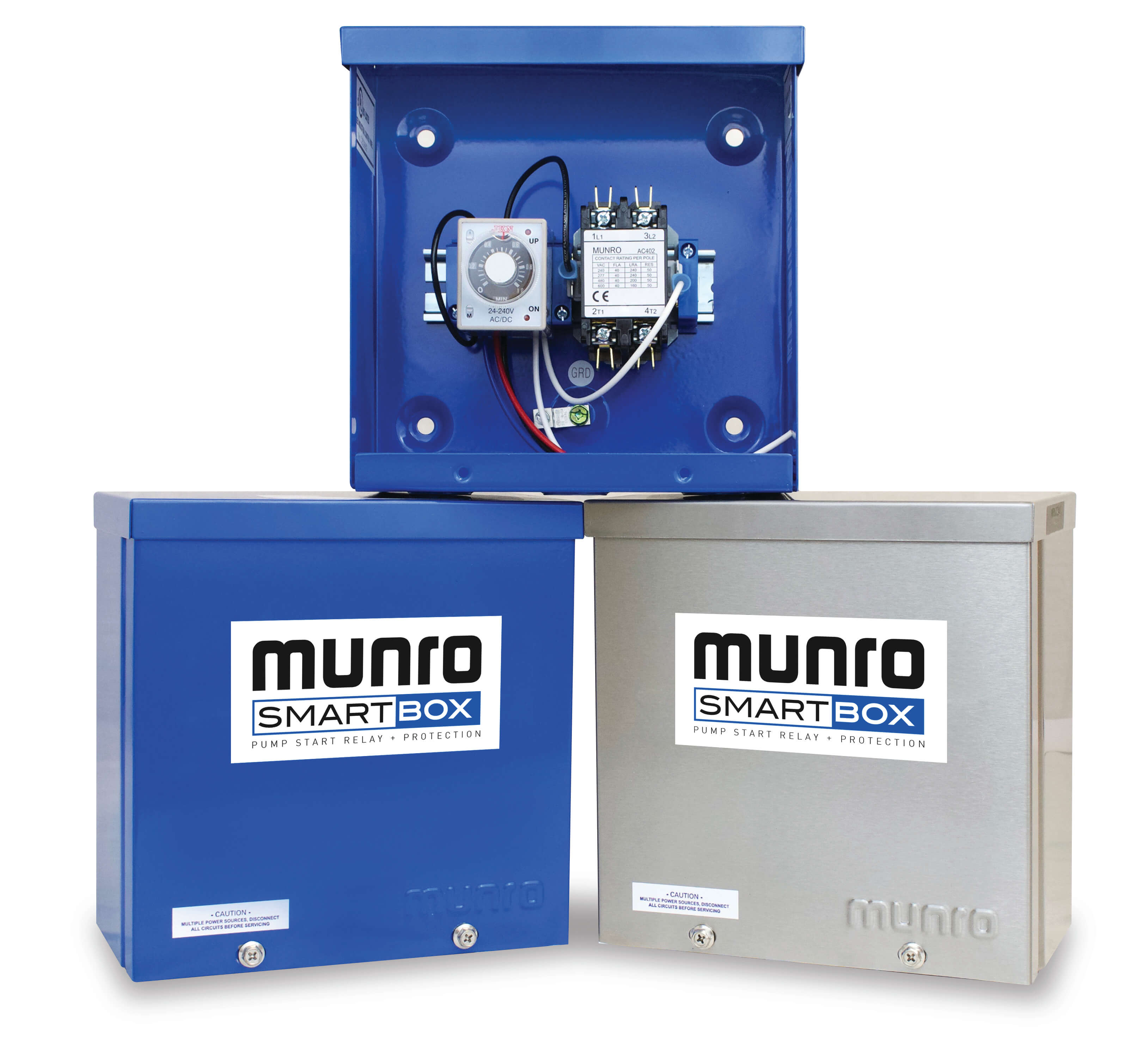
The Munro SmartBox combines pump start functionality with built-in protection against common conditions that can shorten pump life. By monitoring system pressure and temperature, the SmartBox can shut the pump down when it detects conditions such as run-dry, overheating, or loss of prime.
Once the irrigation controller stops calling for the pump to run, the SmartBox automatically resets for the next watering cycle.
Considering the cost of pump repairs, service calls, and downtime, built-in protection can be a valuable addition to the system.
4. Check Horsepower and Voltage
Before ordering a control box, confirm the pump’s horsepower, voltage, and electrical requirements.
Control boxes are available for a range of pump sizes and configurations, so these details are essential for selecting the correct model. Larger horsepower pumps may also require additional overload protection or a different contactor configuration.
A little information up front can save a lot of troubleshooting later. Gather the system details and make sure the pump and controls are set up to work together from the start.
Ready to get started? Visit your local Ewing branch, or call our pump hotline at 1-844-PUMP-PRO.

