
Choosing the right pump control box can impact everything from your project timeline to your budget – and even the long-term performance of the irrigation system. That’s why the team at Ewing is here to help. With deep industry knowledge and trusted resources, we’ll guide you to a pump control solution that fits your needs, so you can move on to the next job with confidence.
Here are four key things to keep in mind when selecting a pump control box.
TIP #1 – Start with the System
Understanding the system’s design and goals is the first step toward selecting the right control box. Are there multiple controllers or pumps involved? Do you need to limit the pump run time? Are you trying to maintain a tank or reservoir level? Or do you simply need a basic pump start relay? Defining the function of the control box helps you determine the best features for the job.
TIP #2 – Know What’s Triggering the Start Signal
Pump start relays can be activated by a variety of external devices, and the type of signal they send will influence your control box selection. When speaking with your Ewing rep, be ready to share how the irrigation system is configured. Some examples of start/stop signal sources include:
- Lawn controller(s) – some models output less than .35 amps and require a low-amp / 2-Wire Decoder Compatible StartBox or SmartBox.
- Manual switches
- Pressure monitors
- Pre-programmed timer
- Tank level sensors – floats or transducers
- Weather triggered
TIP #3 – Don’t Skip Pump Protection
A standard pump start relay provides the basic start/stop function – relaying an electrical signal from the irrigation controller to the pump. But for added peace of mind, consider a relay that also includes pump protection features.
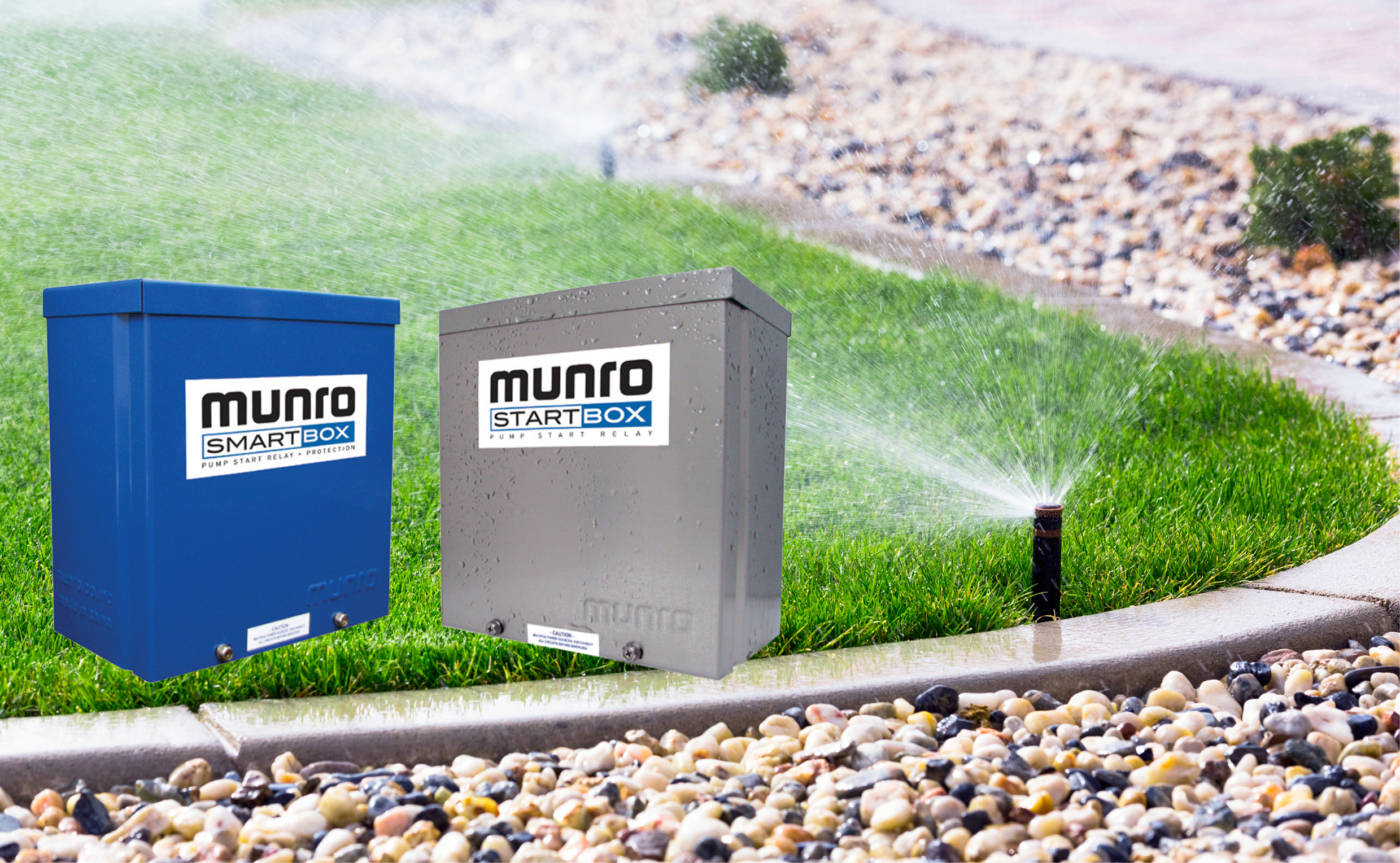
The Munro SmartBox, for example, includes both start/stop functionality and built-in protection. It monitors system pressure and temperature, and will shut the pump down if it detects an issue like running dry, overheating, or loss of prime. Once the controller stops sending the “on” signal, the SmartBox resets, ready to go for the next cycle.
Considering how expensive pump repairs can be – not to mention the time and labor involved – adding protection is a smart investment.
Tip #4 – Confirm HP and Voltage
Before selecting a control box, know the pump’s voltage and horsepower. Most standard relay contactors support 110v to 220v for pumps ranging from ¾ to 3 horsepower. For larger pumps, you may need a different contactor setup and additional overload protection.
Avoid the guesswork. Gather the system info you need up front – and tap into the expertise of the Ewing team to make the right choices.
For help selecting the right pump control box, contact the Ewing Pump Hotline at 1-844-PUMP-PRO or info@ewingpumppro.com.

